
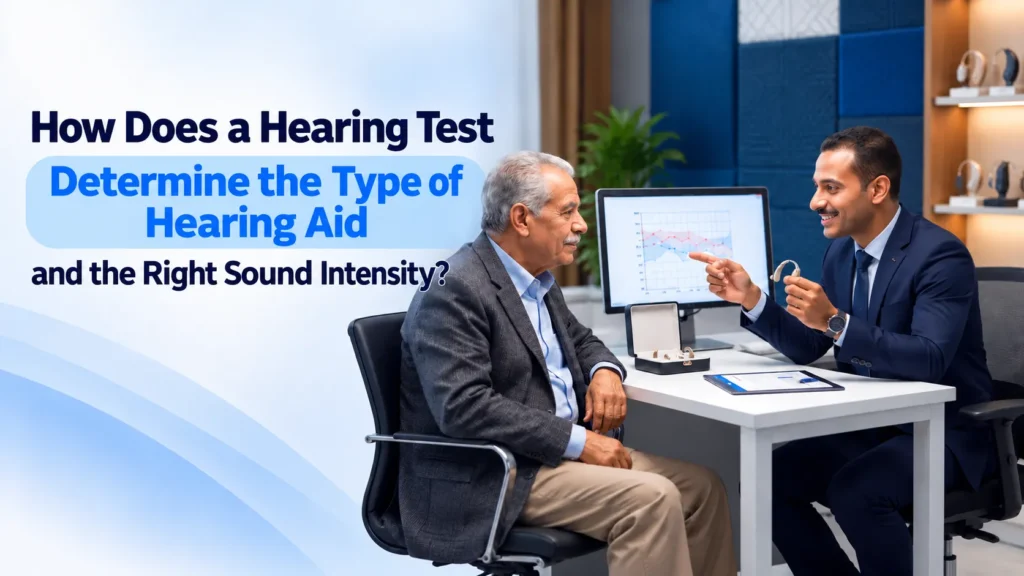
An audiogram helps a specialist understand part of a person’s needs before discussing hearing aids and how they should be adjusted. Therefore, the phrase “How does an audiogram help in choosing a hearing aid?” does not mean that the result alone automatically selects a device or determines one fixed sound level for everyone. Rather, it is part of a broader assessment that considers communication difficulties, lifestyle, health status, and how the hearing aid will be used.
A hearing aid should not be purchased or adjusted based solely on symptoms or another person’s experience. A professional assessment may help provide a clearer picture, after which a hearing specialist can discuss suitable options in a practical and safe way.
How Does an Audiogram Determine the Type of Hearing Aid and Appropriate Sound Level?
An audiogram provides information that helps the specialist understand how a person responds to sounds and discuss their everyday needs before selecting or adjusting a hearing aid. The user should not interpret the result independently, and the result does not mean that there is one specific type or sound level suitable for everyone. After the assessment, a hearing specialist may recommend suitable options and adjust them according to the results, the way the device will be used, and the situations that cause difficulty. Follow-up remains important because individual needs and experiences may vary from one person to another.
Introduction: Understanding the User’s Question and the Everyday Problem
When a person has difficulty understanding speech, needs to increase the television volume, or becomes tired during phone calls, they may immediately start thinking about a hearing aid. However, choosing a hearing aid does not begin simply by asking about its appearance or price. It begins with a more useful question: What is happening in everyday listening situations, and what can a hearing assessment clarify?
One person may notice greater difficulty in crowded places, while another may experience problems with quiet speech or phone calls. Someone may already be using a hearing aid but no longer feel comfortable with it, or their needs may have changed over time. These differences explain why the device or sound level should not be selected randomly.
An audiogram or hearing assessment is part of the process that helps a specialist discuss available options. However, it does not work independently of the person’s medical history, does not replace a medical examination when one is needed, and should not be interpreted as a self-diagnosis. The purpose of this article is to explain the role of the assessment in the decision-making process, not to give readers a method for determining or adjusting their own hearing aids.
What Does an Audiogram Not Tell You on Its Own?
A single result sheet cannot explain every aspect of a person’s communication experience. By itself, it does not tell the specialist about the person’s work environment, the number of phone calls they make each day, how easy it is for them to handle a hearing aid, or how much support they may need from family members. It also does not replace a medical examination if symptoms appear that require one.
Therefore, comparing your result with that of a relative or with an image circulating online can be misleading. The assessment result may help provide a clearer picture, but interpreting it and connecting it to the appropriate next step requires a specialist.
How to Make a Safe and Informed Decision Before Choosing a Solution
A good decision does not mean delaying an assessment or being afraid of the results. It means starting with realistic information. Before your assessment appointment, write down the situations in which you feel that hearing or understanding speech has become more difficult. Is the problem more noticeable during meetings? While watching television? When visiting relatives? In restaurants or on the street? These details are more useful than a general statement such as “I cannot hear well.”
The specialist can then explain what the results may mean in the context of your needs and whether there is a need for medical referral or a discussion about hearing aid options. Requesting an assessment does not mean that you are committed to purchasing a hearing aid, and the fact that another person uses a particular hearing aid does not mean the same option is suitable for you.
How Does an Audiogram Contribute to Discussing Sound Level?
The sound level of a hearing aid is not a fixed number that the user should choose based on what feels loud or comfortable at a particular moment. Adjustment requires a specialist who considers the assessment results and practical information about listening, and then reviews the user’s experience when needed.
Increasing the sound level randomly may not solve speech clarity problems and may not be comfortable in different environments. Therefore, it is better to describe exactly what is happening: “I can hear the sound, but I cannot understand the words,” or “I get tired when more than one person is speaking,” rather than simply asking for the volume to be increased. These observations help make the discussion about the appropriate solution more precise.
How Does an Audiogram Contribute to Discussing Hearing Aid Style and Use?
An audiogram does not select the device style by itself, but it is part of the information that helps the specialist discuss available options. Other factors may also influence the decision, such as the person’s daily needs, comfort, ability to put on and remove the hearing aid and care for it, previous devices, and the environments in which they listen.
To learn about the general categories published on the website, you can review the page What Type of Hearing Aids Is Right for Me?. This page is useful for understanding general differences, but it does not replace an individual assessment or the specialist’s decision.
Practical Factors That Differ From One Person to Another
Hearing Difficulty Is Not the Same in Every Situation
A person may find one-on-one conversation in a quiet place manageable but experience significant difficulty when the conversation involves a group. Another person may be able to follow television programs but become tired during phone calls. These differences do not establish a specific diagnosis, but they are an important part of describing the individual’s needs.
Think about recurring situations rather than focusing on an isolated incident. If the problem occurs consistently in everyday life, this is useful information during an assessment. However, occasional difficulty in an extremely noisy environment alone is not enough to determine whether someone needs a hearing aid.
Lifestyle and Expectations
The needs of someone who works in a quiet environment differ from those of someone who spends a great deal of time in meetings, gatherings, or phone calls. Priorities also differ between someone who wants to make conversations with family easier and someone who needs comfortable use throughout the day. There is no single answer that works for everyone.
It is also important to have realistic expectations. A hearing aid does not treat the underlying cause of hearing loss and does not guarantee that every listening environment will become equally easy. A hearing specialist may recommend appropriate options after an assessment and explain what can reasonably be expected from use, follow-up, and adjustment.
Ability to Use and Maintain the Device
Even when a hearing aid is considered appropriate based on the assessment, everyday use remains an important factor. It is useful to ask the specialist about how to wear the device, clean it, and store it, as well as what batteries or charging requirements apply depending on the available option. You should also discuss any difficulties with hand movement, vision, or memory that could affect your ability to handle the device.
Do not wait until after purchase to ask about maintenance or follow-up. Understanding these details before making a decision helps you choose a practical solution and reduces reliance on inaccurate assumptions.
What Is the Appropriate Next Step With Alarkan After a Professional Assessment?
After gathering your observations and completing the appropriate assessment, you can contact Alarkan to discuss the next step. It is useful to prepare any previous hearing results, if available, and make a short list of the situations in which you experience difficulty, such as phone calls, family visits, or following conversations at work.
When contacting Alarkan, you can ask about the available assessment or consultation, how options are discussed after the examination, and guidance on use and maintenance when available. The goal is to move from a general question such as “Which hearing aid is right?” to a more precise question such as “Which options can be discussed based on my results and everyday needs?”
You can check the current branch or contact method through Alarkan Contact Page. Do not treat urgent symptoms simply as part of a hearing aid purchase request, as they may require medical evaluation first.
What Should You Review Before Choosing a Solution or Booking an Assessment?
Use this checklist to prepare your information before the consultation rather than attempting to diagnose the condition yourself:
Which situations cause the most difficulty: one-on-one conversations, phone calls, television, noise, meetings, or gatherings?
When did the problem begin, and does it seem stable or change over time?
Is there a noticeable difference in one ear or both ears, if the person notices a difference?
Do you have an audiogram or previous hearing assessment results?
Are you currently using a hearing aid, or do you have a previous device that needs review?
Which medications, health conditions, or ear problems should be discussed with a physician?
What is your daily lifestyle and what type of communication do you typically have at home or work?
What is your realistic expectation from the assessment or from any potential solution?
Have you checked the available contact method, branch, and service before your visit?
If there is sudden hearing loss, severe ear pain, discharge, severe dizziness, or sudden or concerning tinnitus, seek evaluation from an ear, nose and throat physician or an appropriate urgent medical service. Do not treat this article or a hearing aid assessment as a substitute for that medical step.
A Practical Decision-Making Table
| Question or Situation | What Might It Mean? | When Should You Consult a Specialist? | Next Step With Alarkan |
|---|---|---|---|
| I can hear sounds but cannot understand speech in noisy environments | There may be a difficulty related to the communication environment | If it happens repeatedly and becomes tiring | Note the environments where the difficulty occurs and request an assessment |
| I always ask for the hearing aid or television volume to be increased | Your listening experience may have changed, or other factors may be involved | When it happens repeatedly or family members notice it | Give specific real-life examples during the consultation |
| I have a previous audiogram | It may provide useful information for the specialist | If your needs have changed or significant time has passed since the assessment | Bring the result to discuss rather than interpreting it yourself |
| I am considering buying a hearing aid because of a relative’s experience | Personal experiences do not establish suitability | Before making a purchase decision | Ask the specialist to relate available options to your own assessment |
| I use a hearing aid but am uncomfortable in certain situations | You may need to review use, adjustment, or maintenance | If the difficulty continues | Explain the specific situations when contacting the specialist |
| I have sudden hearing loss, pain, or severe dizziness | The situation may require urgent medical evaluation | Immediately | Consult an ear, nose and throat physician or an appropriate urgent medical service |
Common Mistakes to Avoid
Buying a Hearing Aid Before an Appropriate Assessment
Buying a hearing aid may seem like a faster step, but it could lead the user to choose a solution that does not account for their needs or to develop unrealistic expectations. An assessment does not mean that purchasing a device is mandatory; rather, it helps organize the questions that should be considered before discussing available options.
Trying to Determine the Sound Level Yourself
Choosing the sound level based on how it feels at one particular moment may not reflect your needs in every environment. You may hear the sound loudly while speech remains unclear, or you may feel uncomfortable when the environment changes. It is better to describe the experience to the specialist rather than attempting to adjust everything randomly.
Assuming the Result Determines Only One Device
An audiogram result is important, but it does not eliminate the other factors involved in the decision. Suitability varies according to assessment results, lifestyle, use, expectations, and the ability to care for the device. There is no single hearing aid that is automatically suitable for everyone with similar results.
Interpreting an Audiogram Without a Specialist
The result may appear easy to read when compared with charts found online, but that does not make self-interpretation safe. Do not determine the degree of hearing loss based on symptoms, and do not make a purchase decision based solely on a graph or numbers. Discuss the result with a specialist in the context of your medical history and everyday situations.
Neglecting Maintenance, Batteries, or Charging
Daily use requires a practical plan. Ask about care, cleaning, storage, and the power requirements associated with the device you discuss with the specialist. These details are not secondary, particularly for older adults or for family members helping someone use the device.
Neglecting Follow-Up After Receiving the Device
New questions may arise after starting to use a hearing aid, or the situations in which the person needs support may change. Follow-up when needed is part of a responsible decision and does not mean that the person has failed to use the hearing aid or that the device is automatically unsuitable.
How Can Alarkan Help You?
Readers can start with the Alarkan website to access published information and current contact methods through Alarkan Hearing Aids. When contacting the company, you can ask about the appropriate step before purchasing, prepare your previous audiogram if available, and explain the everyday situations that cause difficulty.
The discussion may include learning about available options after assessment, arranging a visit to the appropriate branch, and discussing use, follow-up, or care guidance when available. This article does not recommend a specific product or model because doing so requires a professional assessment and individual information.
Steps to Contact Alarkan or Use the Service
- Review the relevant category or information page on the Alarkan website before purchasing any device.
- Identify the available contact method or branch after checking the official page.
- Prepare any hearing results or information about a hearing aid you currently use.
- Complete the appropriate assessment or consultation according to the specialist’s guidance.
- Discuss the available options, adjustment, and necessary features according to your condition and lifestyle.
- Follow up on use and results with the specialist when needed, and seek medical evaluation if urgent symptoms appear.
Frequently Asked Questions: How Does an Audiogram Help in Choosing a Hearing Aid?
Does an audiogram accurately determine the hearing aid’s sound level?
An audiogram helps the specialist discuss appropriate adjustment, but it does not produce one fixed sound level suitable for every person and every situation. The assessment result is considered alongside the person’s needs, how the device is used, and observations during follow-up. Therefore, users should not try to determine or adjust the sound level randomly based solely on a written result or another user’s experience.
Can I choose a type of hearing aid based on an audiogram?
It is not recommended to do so. An audiogram is part of the information used by the specialist, but it does not by itself cover how the person will use the device, their preferences, communication needs, or medical history. A hearing specialist may recommend suitable options after the assessment and explain what should be considered before selection, adjustment, and follow-up.
Does everyone with hearing difficulty need a hearing aid?
Not necessarily. The need for a hearing aid cannot be determined from a single symptom or a general description of the problem. A hearing assessment may help provide a clearer picture of the individual’s needs, and in some cases it may indicate that an ear, nose and throat physician should be consulted. An assessment does not mean that the person is committed to purchasing a device; it is a step that can support an appropriate decision.
Do I need a new hearing test if I already have a previous result?
That depends on how old the result is, your current needs, and what the specialist considers appropriate. If your communication difficulties have changed, your daily use has changed, or your current hearing aid is no longer comfortable, a review may be useful. Bring the previous result to the consultation rather than relying on memory or attempting to interpret it without professional guidance.
Does a hearing aid treat hearing loss or tinnitus?
A hearing aid does not treat the underlying cause of hearing loss or tinnitus, and it does not guarantee a uniform result. It may be part of an appropriate plan to support listening and communication when recommended by a specialist after assessment. Sudden or concerning tinnitus, or any sudden hearing loss, requires urgent medical evaluation.
What is the difference between increasing volume and improving speech clarity?
Increasing volume may be useful in some situations, but it does not guarantee that speech will become clearer. It is therefore important to tell the specialist if you can hear the sound but cannot understand the words, or if the problem occurs in noisy environments or during phone calls. These details help clarify your needs instead of focusing only on volume level.
What should I bring when requesting a hearing assessment?
Bring any previous audiogram or report, information about your current hearing aid if applicable, and a list of everyday situations that cause difficulty. It is also useful to mention how long the problem has been present and any relevant medications, health conditions, or ear problems that should be discussed with a physician or specialist.
When should I see an ear, nose and throat physician urgently?
See an ear, nose and throat physician or an appropriate urgent medical service if you experience sudden hearing loss, severe ear pain, discharge, severe dizziness, or sudden or concerning tinnitus. Do not wait for a routine hearing aid assessment appointment in these situations, and do not try to manage the issue by purchasing a device without medical evaluation.
Start With a Hearing Assessment Before Setting Expectations or Buying a Hearing Aid
If phone calls, gatherings, or following conversations have become a repeated source of difficulty, start by recording the situations in which the problem occurs and request an appropriate assessment. Contact Alarkan to determine the next step after a hearing assessment or to visit an available branch. In this way, “How does an audiogram help in choosing a hearing aid?” becomes part of a balanced decision rather than relying on guesswork or unrealistic promises.
Medical Disclaimer: This article is for general educational purposes only and does not replace a hearing assessment by a qualified specialist or consultation with an ear, nose and throat physician when needed.